


By James Bell
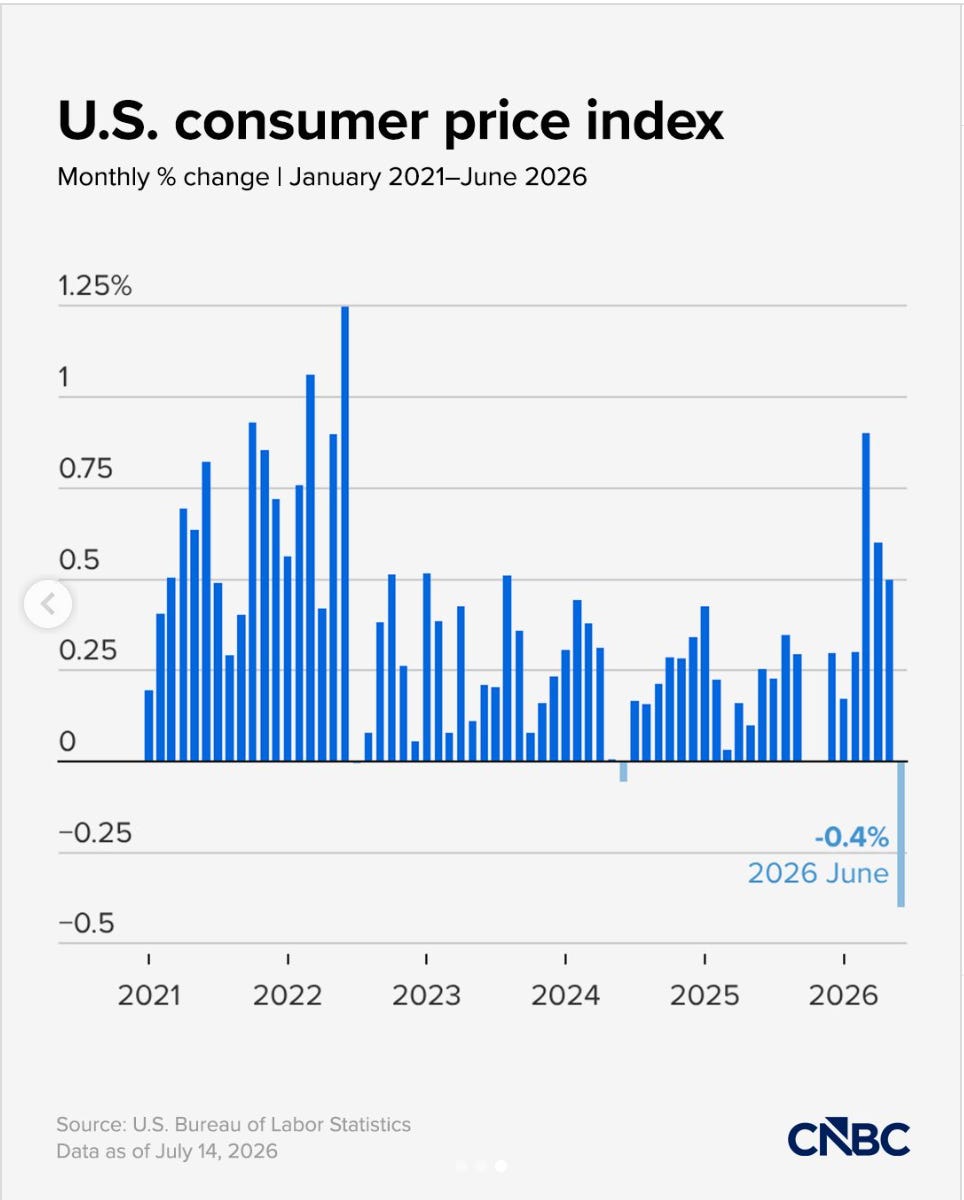
At 8:30 this morning, the Bureau of Labor Statistics released the July Consumer Price Index, and by 8:31 half of America’s mortgage desks were rewriting their rate sheets. The 30-year fixed is sitting near 6.63%. Every buyer with a pre-approval is refreshing a rate tracker. Every agent working the median market is holding their breath.
And in Kalorama, McLean, and Georgetown, not one of the people actually setting the top of this market noticed.
That is the story the Wall Street Journal put on a national stage this summer with its “billionaire bump” — and it is the story hiding inside the closing figures I’ve been watching all quarter. Washington’s luxury market isn’t defying the rate environment. It has simply exited it
.The numbers don’t cool in August
Conventional wisdom says the high end goes quiet after the spring frenzy and stays quiet until the leaves turn. Look at what actually closed.
The most expensive sale of the second quarter was 1169 Crest Lane in McLean — $12.845 million, closed April 14. Ten days later, its neighbor at 1175 Crest Lane traded for $12.45 million. Two eight-figure sales on the same street, inside two weeks, before the summer even started.
Zoom out and the pattern holds across the region. The D.C. metro recorded 767 luxury sales in the second quarter, up 4.5% year over year. McLean’s 22101 ZIP code alone led the entire Mid-Atlantic — 76 of its 144 sales, nearly 53%, cleared the luxury threshold. The price of admission to that threshold is now $1.9 million, up 5.6% in a year. Homes at this level went from listing to contract in a median of seven days. Inventory fell almost 19%.
Now the part that explains the rest: 33.6% of these sales were all cash. One in three of Washington’s most expensive homes traded with no mortgage, no rate lock, and no appraisal contingency. For a third of this market, the number that dominated the news this morning is a rounding error.
Bright MLS economist Lisa Sturtevant said it plainly: “High-income buyers are less sensitive to elevated mortgage rates and benefit from greater economic security.” That is the whole thesis in one sentence.
Who’s actually writing the checks
The Journal framed it as a wealth migration, and the buyer roster of the past eighteen months reads like a seating chart for power in this city.
Mark Zuckerberg paid roughly $23 million for a 15,400-square-foot compound in Massachusetts Avenue Heights, minutes from the White House. Howard Lutnick, the Cantor Fitzgerald chairman, set a neighborhood record at $25 million for a French-château estate in Foxhall. Treasury’s Scott Bessent took a Federal-style Georgetown home for $12.5 million; Senator David McCormick, another Wall Street name, paid $10.5 million a few blocks away. David Sacks landed around $10.3 million.
Notice the through-line. This is banking and finance money — hedge fund principals, a bond-market chairman, a Treasury secretary — buying trophy real estate not as an investment play but as a foothold. They are buying proximity. In this town, that has always been the most valuable square footage there is.
And it isn’t only the billionaires. The names one tier down tell the same story with smaller decimals: a $3.77 million Georgetown townhouse to a CFO and a PR executive, a $3.33 million Cleveland Park house to Google’s head of federal policy, a $3.8 million new build in Chevy Chase. Cash-comfortable, career-secure, rate-indifferent. The same buyer, one weight class lighter.
What this means if you’re selling — or reading a rate headline
For sellers at the top of this market, the lesson of the quarter is that you are not competing with the Federal Reserve. You are competing with 917 listings — a historically thin shelf — for a pool of buyers who have already decided that Washington is where they need to be. Price to that reality and you sell in a week.
For everyone reading this morning’s CPI coverage and wondering what it means for the luxury market: it means almost nothing. The rate everyone is watching applies to a market these buyers left behind. When a third of your comparable sales close in cash and the rest are financed by people for whom the payment is immaterial, the mortgage rate stops being a market force and becomes a piece of trivia.
Washington’s most expensive houses are trading on a different frequency entirely. This morning proved it again.
This is the American side of a story that doesn’t stop at the water’s edge. The same capital reshaping Georgetown and Kalorama is reshaping Mayfair and Chelsea — often held by the very same people. On Friday, I’ll take you across the Atlantic to a London listing that shows exactly what that money buys on the other end. My colleagues at Sotheby’s in the UK will want to see this one.
James Bell is a licensed broker in Washington, D.C. and Georgia with more than thirty years and $1.2 billion in closed transactions. Billion Dollar Broker publishes to more than 7,000 subscribers.